Summary
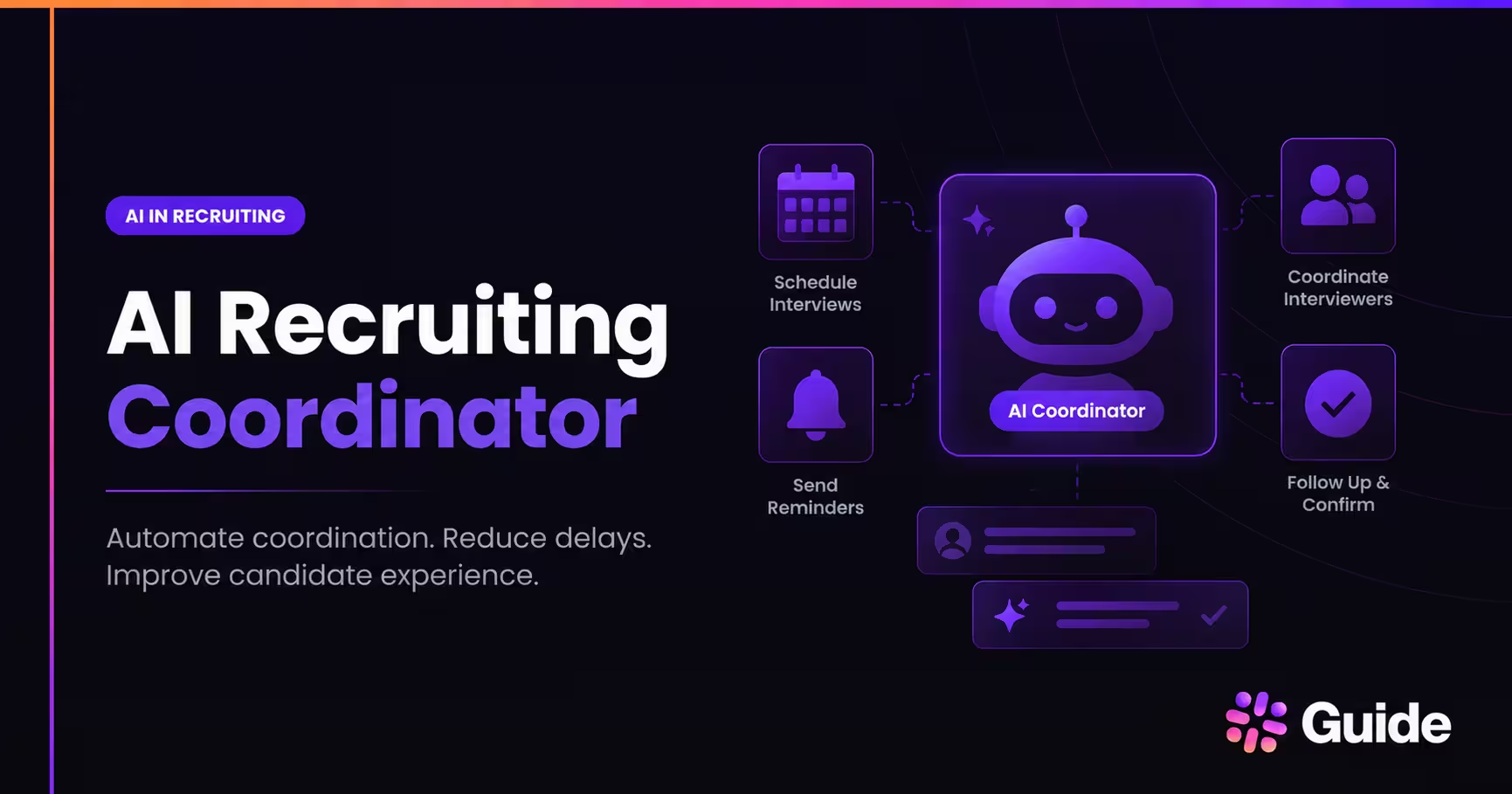
Recruiting coordination software manages interview scheduling, candidate communication, feedback, and reporting in one system. In 2026, 27% of talent acquisition leaders called their workload unmanageable, up from 20% the prior year. Unlike an ATS, which tracks the hiring pipeline itself, coordination tools sit on top of it. Platforms like Guide automate scheduling up to 7x faster than manual methods.
Why recruiting coordination outgrew a single tool
According to a 2026 recruiting statistics report from SelectSoftwareReviews, 27% of talent acquisition leaders now describe their team's workload as unmanageable, up from 20% the year before. The same report found that 66% of hiring leaders expect recruiters to spend more time on candidate engagement in the coming years, and 60% predict recruiters will take on more strategic, data-driven work. None of that happens if a coordination team is still managing scheduling in one tool, candidate messages in a shared inbox, and feedback in a survey platform nobody actually reads.
Coordination is not really one job. It is several jobs that happen to land on the same person's plate: getting interviews on the calendar, keeping candidates informed and well represented, and understanding afterward whether the process actually worked. Recruiting coordination software grew into its own category because point solutions for each of those jobs kept leaving gaps between them.
What recruiting coordination software actually covers
- Interview scheduling and panel logistics. Finding times across multiple calendars, handling declines and reschedules, and managing multi-day or multi-person panels.
- Candidate communication and branding. Sending confirmations, prep materials, and updates that look and feel like part of a company's hiring process rather than a generic calendar invite.
- Feedback and reporting. Collecting structured candidate feedback and surfacing metrics like time-to-schedule, reschedule rate, and candidate NPS so a team can see where the process is actually breaking down.
- Interviewer operations. Tracking interviewer training, balancing interview load across a pool, and keeping calendar preferences current.
- ATS and calendar integration. Working inside the tools a team already uses so coordination data stays connected to the rest of the hiring pipeline instead of living in a separate system.
Recruiting coordination software vs. stitching tools together
A lot of teams start out coordinating interviews with a scheduling link, a shared inbox, and maybe an ATS-native survey feature. That works for a while. The gaps show up as volume grows: candidate messages live in one place, scheduling data lives in another, and feedback sits in a tool nobody circles back to, so nobody has a single view of how the process is actually performing.
An all-in-one recruiting coordination platform trades some of that flexibility for a single source of truth: one place where scheduling, communication, and feedback data connect to each other, so a slow stage or a drop-off point is visible instead of buried across three different tools.
What to look for in recruiting coordination software
- Does it cover the whole candidate journey? Scheduling alone leaves communication and feedback as separate problems to solve elsewhere.
- Does it centralize candidate communication? Confirmations, reminders, and prep materials should come from one branded, trackable channel.
- Does it collect structured feedback, not just generic ATS surveys? Blind spots in candidate experience are hard to fix if nobody is asking the right questions at the right moment.
- Does it give visibility into interviewer load and training? As a team scales, someone needs to know who is overloaded and who still needs to be onboarded.
- Does it integrate natively with your ATS? Coordination data disconnected from your pipeline is much harder to act on.
- What security certifications does it hold? SOC 2 and GDPR compliance are reasonable baseline expectations for a tool handling candidate data.
- Can it scale with hiring volume? A workflow that works for ten interviews a week should not fall apart at two hundred.
- How long does rollout take? Tools that require every workflow to be configured manually upfront tend to take much longer to stand up than ones that learn from behavior over time.
How our platform covers recruiting coordination end-to-end
This is exactly why we built Guide as a full recruiting operations platform instead of a single scheduling tool. Guide brings together interview scheduling, a candidate portal, branded messaging, and live candidate surveys, so a coordination team is working from one connected system instead of stitching several tools together by hand.
Interview scheduling automation
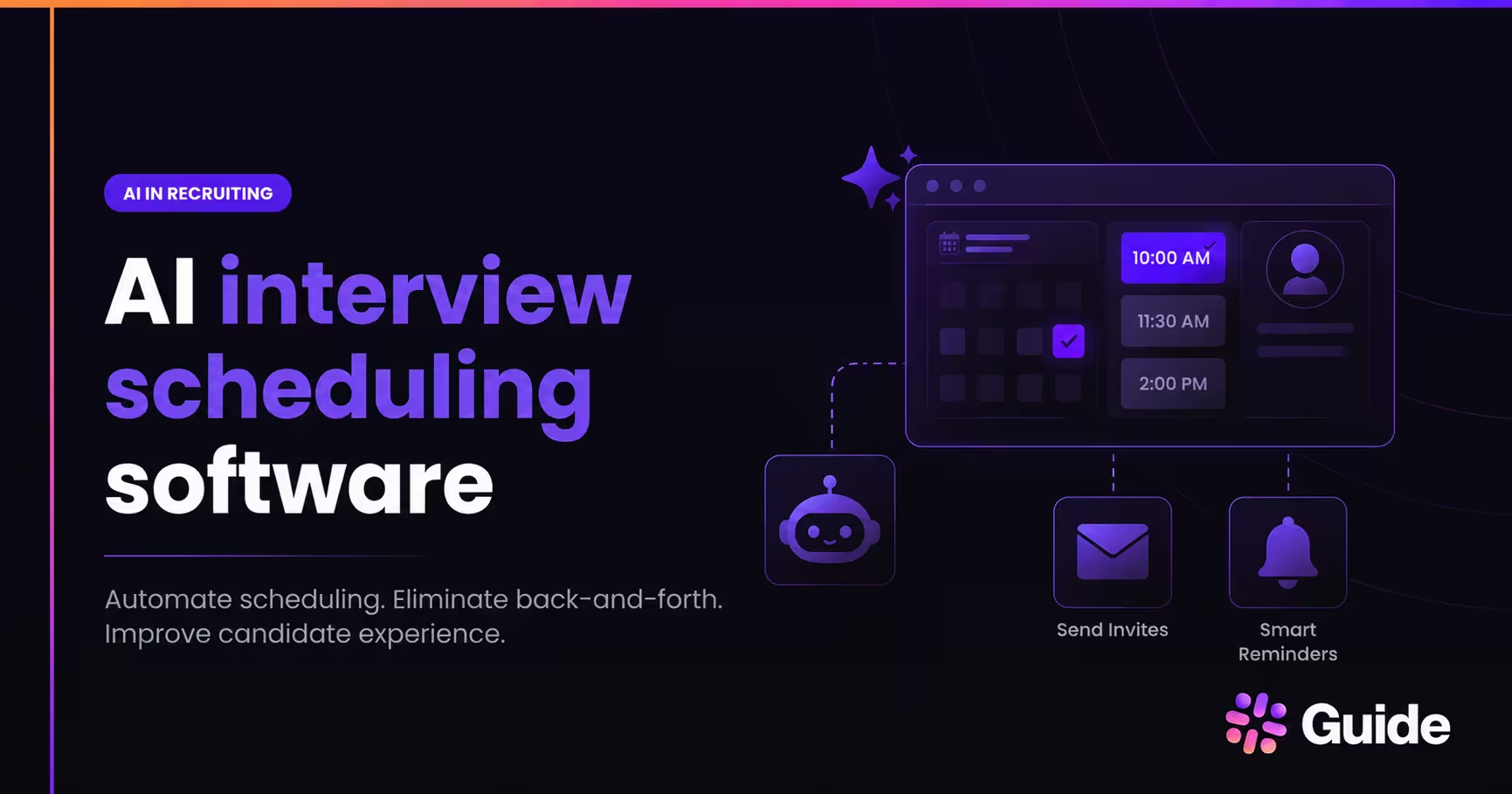
Our AI Scheduler, powered by Aria, automates availability requests, confirmations, and reschedules, handles multi-day and panel interviews, and resolves interviewer conflicts automatically. Teams coordinate up to 7x faster with Guide than with manual, spreadsheet-and-email scheduling. You can read more in our AI interview scheduling software guide.
Candidate portal and communication
Our candidate portal centralizes everything a candidate needs, interview schedules, interviewer bios, prep materials, and process updates, and delivers it automatically instead of through manual copy and paste. Our Messenger brings branded, trackable communication into a modern hub that works directly inside Greenhouse, with real-time engagement analytics so you know when a candidate has actually seen a message. Together, they replace static, unengaging email templates with a personalized, on-brand experience for every candidate.
Feedback, reporting, and interview insights
Our Live Surveys collect candidate feedback automatically after every interview, with no setup required. About 1 in 3 candidates complete a Guide candidate survey, which we believe converts at roughly 3 times the rate of typical email-based ATS surveys. Our Survey Response Escrow approach keeps responses anonymous and unavailable until after a hiring decision is made, so candidates can give honest feedback without it affecting their outcome. That feedback rolls up into candidate NPS tracking and reporting you can filter by timeframe, role, department, or interview stage, so you can see exactly where a process is losing candidates instead of guessing.
Who this is built for
We built Guide for recruiting operations and coordination teams running high volumes of interviews, often with complex, multi-person panels, tight time-to-hire targets, and a strong focus on candidate experience. Teams at GitLab, Netlify, MongoDB, Glossier, Strava, and NexHealth, among others, use Guide today. If your hiring process is simple, low-volume, or handled by a single recruiter without a dedicated coordination function, a full recruiting coordination platform may be more than you need right now.
What our customers say
Darla Downing, Head of Talent Ops at Netlify, told us: "Guide gives us a massive competitive advantage by helping Netlify stand out, especially in the remote hiring environment."
Stephanie Burrus, Senior Manager, Business Recruiter at Glossier, told us: "Guide has significantly improved our efficiency and our candidate experience. We've seen a 40% increase in candidate NPS, 35 minutes of RC time savings per candidate, and less human errors throughout the hiring process. It's been a major upgrade."
Cristina Disch, Global Candidate Experience Manager at MongoDB, told us: "We were in pain before we found Guide. Our coordination team is more efficient, we schedule interviews faster than ever and candidates genuinely love the experience."
You can read more customer stories on our customer stories page.
Security and compliance
We are SOC 2 audited and certified, GDPR and CCPA compliant, and we encrypt all data at rest and in transit with strict access controls.
Frequently asked questions
Is recruiting coordination software the same as an ATS?
No. An applicant tracking system manages the overall hiring pipeline, including job postings, applications, and candidate stages. Recruiting coordination software focuses on the scheduling, communication, and feedback layer on top of that pipeline, and the best tools in this category work natively inside an ATS like Greenhouse rather than replacing it.
Does this replace our current survey and reporting tools?
Guide is built to be a strong addition to a recruiting analytics stack. Quantitative funnel reports are useful, but without qualitative, candidate-driven feedback it is hard to understand the "why" behind a problem like candidate drop-off. Our Live Surveys are built natively into our candidate portal and require no setup to start collecting feedback.
How is this different from just an interview scheduling tool?
An interview scheduling tool solves one part of coordination. Recruiting coordination software, including our platform, also covers candidate communication, structured feedback, and reporting, so a team has one connected system instead of separate tools for each piece of the process.
What is Survey Response Escrow?
It is our approach to collecting honest candidate feedback. Responses are anonymous and kept in escrow, meaning they are not unlocked or shared until after a hiring decision has been made, which removes the incentive for a candidate to hold back an honest answer.
Is it secure?
Yes. We are SOC 2 audited and certified, GDPR and CCPA compliant, and we encrypt all data at rest and in transit.
See it in action
If coordination has outgrown a single scheduling tool, we would love to show you how our platform handles scheduling, communication, and feedback together. Book a demo or explore our candidate portal, Messenger, and Live Surveys products.